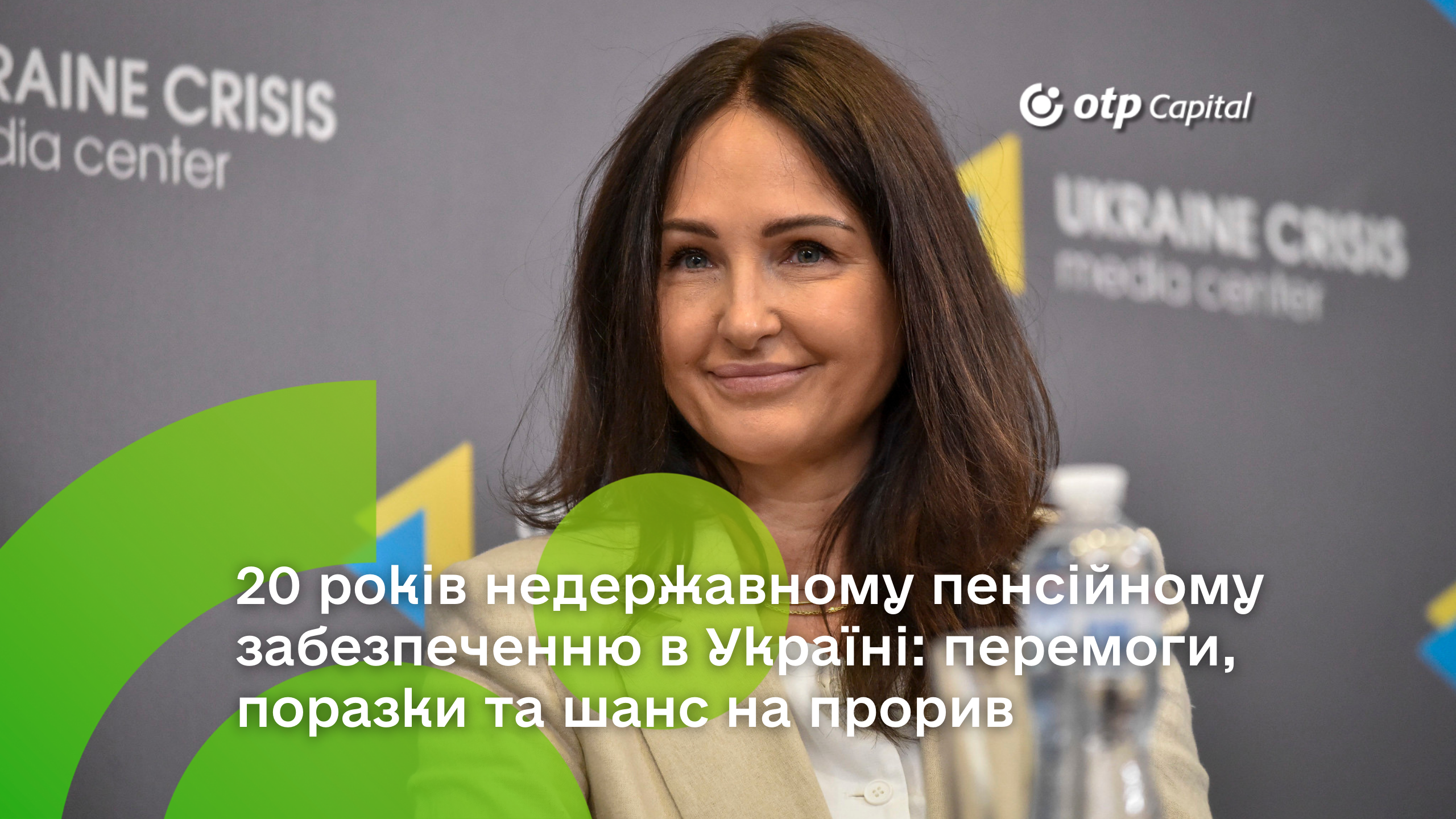
Twenty years ago, an instrument emerged in Ukraine that gave people the opportunity to take personal responsibility for their financial future — non-state pension funds (NPFs). Over this time, NPFs have become an important part of the funded pension system and have helped hundreds of thousands of Ukrainians build their own savings, strengthening a culture of responsible retirement planning.
This milestone offers an opportunity to assess what has already been achieved, what challenges the system faces today, and where it is heading next. These topics were the focus of an online conference held to mark the 20th anniversary of NPFs in Ukraine.
Youth and a New Financial Culture
Over the past few years, we have observed a noticeable shift in how Ukrainians view their financial future. While non-state pension funds were previously the choice of a more mature audience, today younger generations are increasingly joining them. This is shaping an entirely new financial culture — one of long-term planning, even under challenging circumstances.
Despite the war and economic uncertainty, we see a clear trend toward a “younger” participant base:
- the average age of clients over the past 5–7 years has decreased from 45 to 40
- among those joining via online channels, the average age is even lower — around 37
- more than 35% of participants are aged 30–40
- young people aged 20–30 who sign pension contracts account for over 15%
These figures are encouraging: the younger generation no longer relies solely on the state pension and is actively seeking tools for saving and capital accumulation. According to a 2021 survey by KSE and USAID, more than 60% of young Ukrainians consider it necessary to have additional financial instruments, yet in practice only a small number actually use NPFs. This clearly highlights the gap between need and action that we still need to overcome.
It is also noteworthy that 38% of our clients work in the IT sector — an industry that largely attracts young people and encourages strategic thinking about the future. This largely explains the trend toward a younger NPF audience.
Strategic Development of the Pension System
Financial independence of citizens and the stability of the pension system are closely interconnected. For the funded system to work effectively, a clear government strategy and transparent rules are essential. Today, Ukraine stands at a crossroads: the decisions made now will determine how the pension system develops in the coming years.
We face a key choice: whether to introduce a mandatory second pillar of funded pensions, or to keep the third pillar — voluntary NPFs — as the primary mechanism. Although this may seem like a technical issue, it has fundamental importance for the country’s socio-economic stability.
If the second pillar becomes a priority, the state must ensure clear administration rules, independent oversight, guarantee mechanisms, and transparency.
If the focus remains on the third pillar, incentives are needed: tax benefits for participants, information campaigns, support for IT companies developing transparent accounting software, and high-quality training for fund professionals.
Unfortunately, today we mainly observe tighter regulatory requirements. Without systemic support, incentives, and financial education, the development of NPFs risks remaining merely declarative.
Looking Ahead
Twenty years of NPF operation have proven that they are an effective tool for accumulating savings and protecting citizens’ financial futures. The sector continues to evolve, becoming more transparent and adopting modern technologies, online services, and electronic signatures — making participation in funds more accessible and convenient.
Our goal for the coming years is to strengthen trust, attract more young people, and make saving the norm rather than the exception. Because this is not only about the financial market — it is about social security, economic resilience, and every Ukrainian’s confidence in tomorrow.
Watch the video dedicated to the 20th anniversary of non-state pension provision in Ukraine: